Description
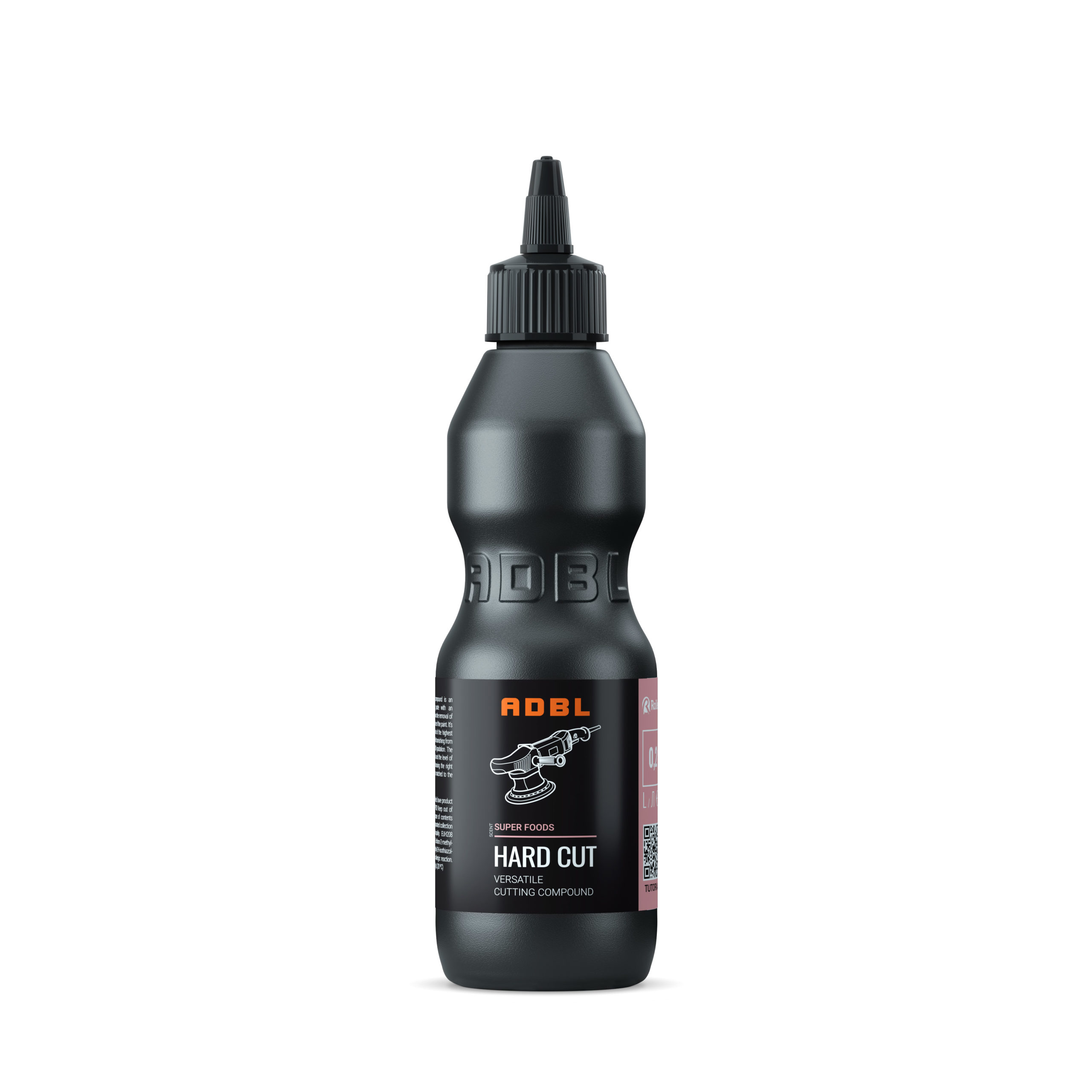
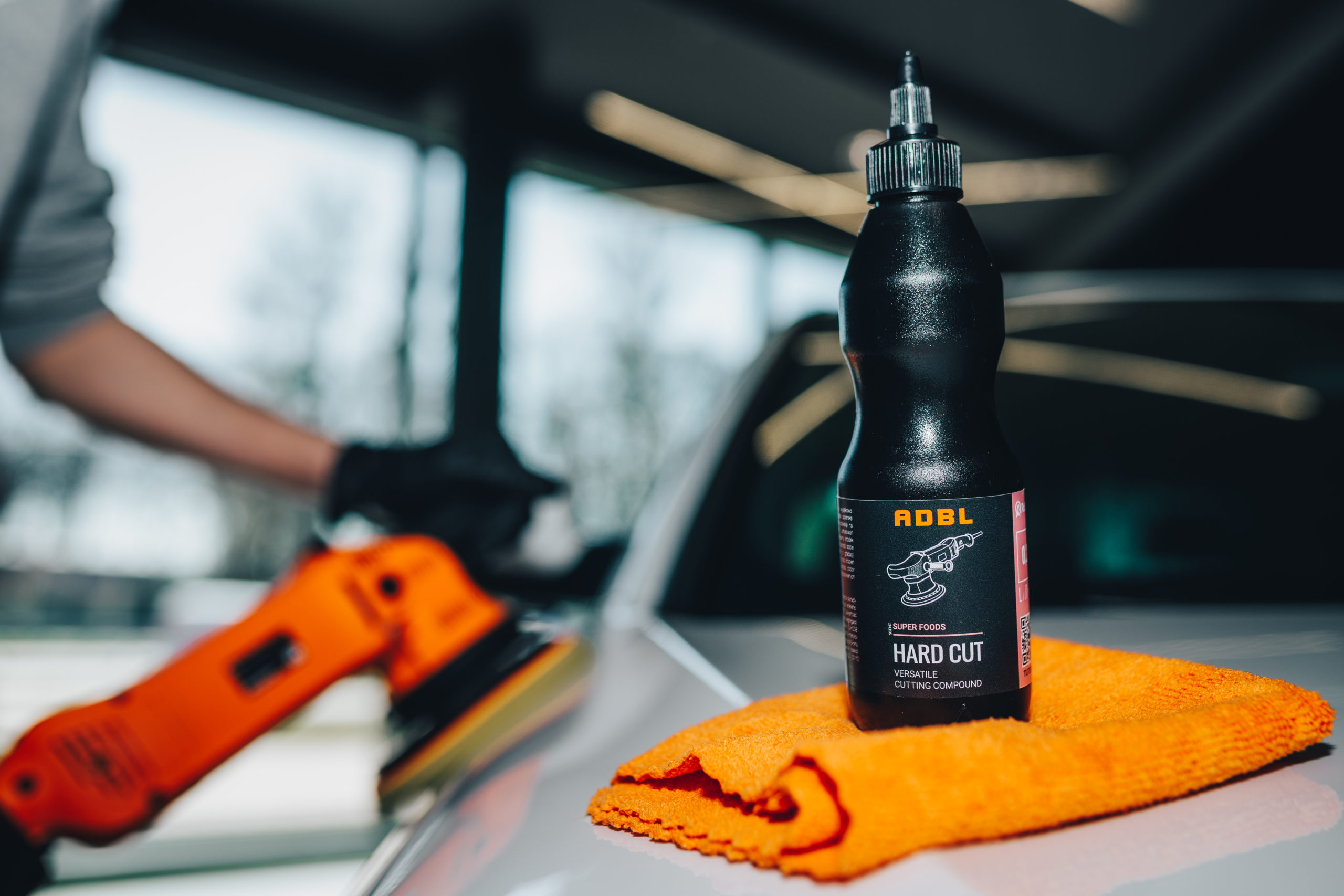
When swirls become scratches and a finishing polish simply isn’t going to cut it, reach for ADBL Hard Cut.
ADBL Hard Cut is a powerful automotive cutting compound designed to remove deep paint defects, severe scratches and sanding marks from P1000–P1500 grit while still delivering an impressively smooth finish for a compound with this level of correction.
Its advanced abrasive technology combines strong cutting performance with low dust generation and an efficient working cycle, while the water-based formula contains no silicones, fillers or waxes.
That last point matters: Hard Cut is designed to actually correct defects rather than temporarily disguise them.
Compatible with rotary and dual-action polishing machines and a wide range of foam, microfibre and wool pads, it’s a highly versatile compound for serious paint correction.
Perfect if…
- Your paint has scratches that a normal polish simply won’t remove – Hard Cut provides considerably more correction than a finishing or all-in-one polish.
- You’re dealing with severe swirl marks and neglected paintwork – its strong cutting ability makes it suitable for substantial paint correction.
- You’ve wet-sanded an area and need to restore the finish – ADBL specifies Hard Cut for removing sanding marks from approximately P1000–P1500.
- You want genuine correction rather than something that fills scratches temporarily – the formula contains no fillers, waxes or silicones.
- You’re carrying out a multi-stage paint correction – use Hard Cut for the heavy correction stage before refining the finish with a finer polish.
- You’re working on harder paint and want to explore a one-step correction – with the correct machine and pad combination, ADBL says Hard Cut can produce sufficient finishing quality to work as a one-step solution on some harder paints.
Why choose ADBL Hard Cut?
- Strong cutting power – designed specifically for substantial defect removal.
- Removes deep scratches – tackles defects beyond the capabilities of conventional finishing polishes.
- P1000–P1500 sanding-mark removal – suitable for demanding correction work.
- Excellent finishing ability for a heavy compound – combines serious cutting performance with a smooth finish.
- No fillers – defects are corrected rather than cosmetically concealed.
- No waxes or silicones – leaves you with a genuine view of the corrected paint.
- Water-based formula – makes residue and polishing dust easier to manage.
- Low dust generation – helps keep the polishing process cleaner.
- DA and rotary compatible – works with both major types of polishing machine.
- Wide pad compatibility – suitable for foam, microfibre and wool polishing pads.
- Potential one-step capability – particularly on harder paint when paired with the appropriate pad and machine.
How to use
Thoroughly wash, decontaminate and dry the paint before beginning any machine polishing.
Shake ADBL Hard Cut well before use.
Attach your chosen polishing pad centrally to the backing plate.
Apply a maximum of four small pea-sized drops of compound to an unprimed pad for an area of approximately 40 × 40 cm.
Place the pad flat against the paint before starting the machine.
Begin at low speed to evenly distribute the compound across the working area. Increase the machine speed as appropriate and gradually introduce moderate pressure.
Keep the pad as flat as possible and work the compound methodically across the section.
As Hard Cut is worked, it develops a transparent film, making it easier to monitor the paint and your correction progress.
Once the polishing cycle is complete, remove the residue using a clean, soft microfibre towel.
Inspect the corrected area under suitable lighting and repeat or refine with a less aggressive polish where necessary.
Avoid working in direct sunlight.
Related Products
Liquid Elements Centriforce V2 Red Heavy Cut Polishing Pad – An excellent foam-pad pairing when you want substantial correction while retaining more control over the cut. Available from Prestige Detailing in 125 mm and 150 mm sizes.
Liquid Elements Centriforce V2 Blue Super Heavy Cut Polishing Pad – Step up to the more aggressive Blue Centriforce when the defects demand greater cutting performance. Particularly useful for harder paint and more demanding correction jobs.
GYEON Q²M Rotary Wool Heavy Cut – A wool cutting-pad option for experienced users carrying out aggressive correction with a rotary machine.
ADBL Inspector – Use after polishing to remove compound residue and oils before inspecting the paint. This gives you a much more reliable view of the correction you’ve actually achieved.
ADBL Perfect Finish – Follow Hard Cut with a finishing polish when the cutting stage leaves haze, micro-marring or insufficient clarity. This turns Hard Cut into the correction stage of a proper two-step polishing process.
Liquid Elements Centriforce V2 Green Soft Cut Polishing Pad – Pair a softer pad with your finishing polish when the objective shifts from defect removal to refining gloss and clarity.
Prestige Detailing Tip
Your pad determines how Hard Cut behaves almost as much as the compound itself.
That’s why we wouldn’t automatically pair ADBL Hard Cut with the most aggressive pad available.
Start with a test section.
If the defects are moderate, Hard Cut paired with something like the Liquid Elements Centriforce V2 Red Heavy Cut pad may provide all the correction you need while still producing a good finish.
If you’re dealing with severe defects or particularly hard paint, you can step up to the Blue Super Heavy Cut pad or an appropriate wool pad.
Conversely, if Hard Cut removes the defects but leaves the finish slightly hazy, don’t keep polishing aggressively in an attempt to create more gloss. The cutting stage has already done its job.
Move to a finishing polish and softer pad instead.
The objective of paint correction isn’t to remove as much clear coat as possible.
It’s to remove as little as necessary to achieve the result you want.
And don’t fall into the trap of thinking:
more compound + more pressure + more machine speed = more correction.
ADBL specifically warns against this. Excessive product, pressure or speed can overload the pad, make residue harder to remove, cause the compound to dry prematurely and increase dusting.
Four small drops on roughly a 40 × 40 cm section are enough.
Start mild. Inspect. Step up only when necessary.
Type: Heavy-cut polishing compound
Cut: High
Suitable defects: Deep scratches, severe swirls and sanding marks
Sanding-mark capability: Approximately P1000–P1500
Formula: Water based
Fillers: None
Silicones: None
Waxes: None
Machine compatibility: Dual Action and rotary
Pad compatibility: Foam, microfibre and wool
Potential one-step use: Yes, particularly on harder paint with an appropriate pad/machine combination
Scent: Super Foods
Available sizes: 200 ml and 1 L