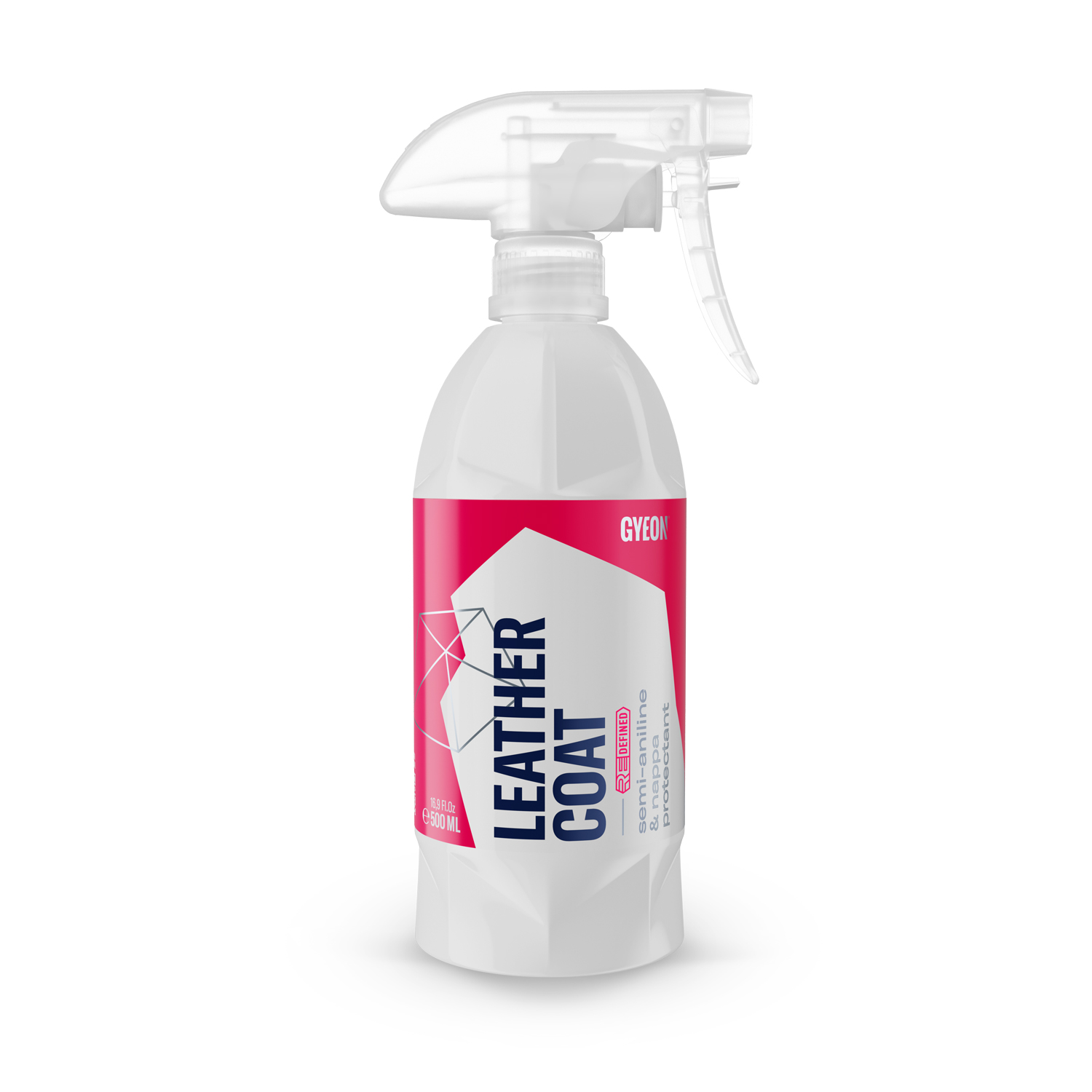
Description
GYEON Q² LeatherCoat REDEFINED is an easy-to-apply leather sealant designed to protect modern automotive upholstery from the wear and contamination that comes with everyday use.
Applied to properly cleaned leather, it creates an invisible hydrophobic barrier that helps repel liquids, sweat and dirt while also providing protection against UV exposure. LeatherCoat REDEFINED can also help reduce dye transfer from clothing – particularly useful on lighter-coloured seats susceptible to staining from jeans and other fabrics.
Despite adding a protective layer, Q² LeatherCoat REDEFINED doesn’t leave your seats looking glossy or feeling coated. Instead, it preserves the natural feel and factory-matte appearance of the leather.
With real-world durability exceeding three months, it offers a straightforward way of protecting leather without stepping up to a longer-term ceramic coating such as Q² LeatherShield EVO.
Prestige Detailing Tips
- Preparation matters. Thoroughly clean the upholstery with Q²M LeatherCleaner Natural or Q²M LeatherCleaner Strong, depending on the condition of the leather, before applying LeatherCoat REDEFINED.
- Make sure the leather is clean and dry before application. Cleaner residue, dirt or oils left on the surface can compromise the quality and consistency of the protection.
- Apply Q² LeatherCoat REDEFINED to a soft microfibre cloth or applicator and spread a single, even layer across the leather.
- Allow the product to absorb into the surface before inspecting it and wiping away any visible residue.
- Don’t over-apply the product in pursuit of additional protection. A controlled, even application is preferable to leaving excess product sitting on the leather.
- Q² LeatherCoat REDEFINED is particularly useful for lighter-coloured interiors where dye transfer can be a concern. For maximum resistance to dye transfer and longer-term protection, consider Q² LeatherShield EVO instead.
- After application, allow the treated leather to dry before using the seats. GYEON’s current LeatherCoat REDEFINED instructions do not specify a fixed multi-hour curing period, so there is no need to invent an arbitrary 6-, 12- or 24-hour restriction.